
Erhu Construction and Acoustics: From Soundbox to Snake Skin
An introduction to erhu construction and acoustics: how the soundbox, snake skin, neck, and bow shape its unique tone, plus materials and listening tips.
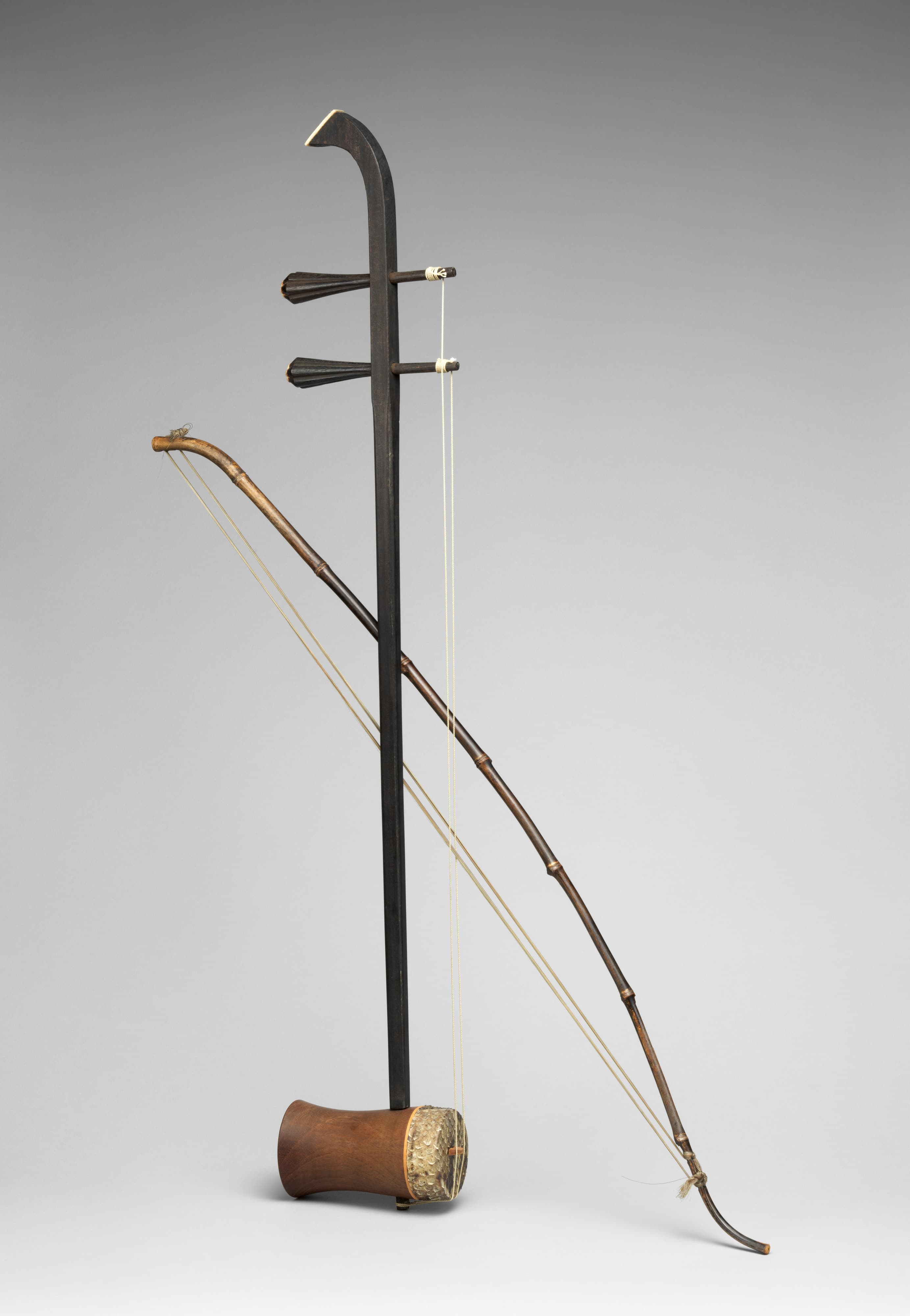
Where the Erhu Comes From: From Xiqin to a Fixed Form
The erhu traces its ancestry to the xiqin, a bowed instrument used by the Xi people of the north around the Tang and Song periods. It entered the Central Plains in the late Tang and appeared in banquet and military music by the Yuan dynasty. For centuries afterward it circulated in various regional forms, with no fixed name, size, or materials. Its modern form took shape only in the twentieth century. During the May Fourth period, Liu Tianhua drew on European music theory and certain violin practices, tuning the erhu to d and a and reforming its playing techniques, moving it from accompaniment and ensemble roles to the solo stage. At the same time, Zhou Shaomei, Zhou Ronggen, Tao Hongmao and others improved the neck, soundbox, snake skin, bow, and strings—lengthening the neck, enlarging the soundbox, and using thicker strings—which enhanced both volume and tone. Today's erhu is thus the product of both traditional xiqin lineage and twentieth-century instrument reform.
Soundbox and Snake Skin: The First Gate of Erhu Tone
The erhu's soundbox is its resonating body, usually hexagonal, though octagonal and front-octagonal-rear-round variants exist. One end is covered with python skin; the other is open or fitted with a sound window. The thickness and shape of the soundbox, its internal dimensions, and the thickness and tension of the python skin all directly affect the sound. Traditionally, erhus made in Shanghai have a softer tone, those from Beijing are more strident, and those from Suzhou are sweeter—differences largely stemming from how makers treat the soundbox and skin. The python skin is central to erhu tone: it has enough tension to withstand string pressure while its elasticity and damping convert string vibration into a sound with a distinctive nasal quality and singing character. In recent years, rising costs of python skin and CITES restrictions on its trade have led makers to develop substitute materials that imitate its tone. Scientific study of erhu acoustics is still ongoing, and how the soundbox and skin couple precisely remains a question worth investigating.
Neck, Strings, and Bow: How Vibration Is Transmitted
The neck is the erhu's spine, usually made of hardwoods such as rosewood, small-leaf red sandalwood, ebony, or chicken-wing wood; ivory, jade, and plastic are sometimes used for non-acoustic reasons. The neck supports the strings and soundbox and also participates in transmitting vibration. As for strings, modern erhus typically use steel strings; silk strings are rarely used today. Steel strings have high tension, stable intonation, and more controllable volume, suiting modern Chinese orchestras and solo performance. The bow is threaded between the two strings, and the bow hair rubs the strings to produce sound—this distinguishes the erhu from many bowed instruments: the hair does not leave the strings but stays in contact, and the player controls tone through bow pressure, speed, and contact point. String vibration travels through the bridge to the python skin, then is amplified and shaped by the air and walls inside the soundbox, producing the sound we hear. Any change in this chain leaves its mark on the tone.
Form Variants: From Flat-Eight to Erquan Qin
The erhu has never had only one standard form. Since the twentieth century, makers and players have continually tried new designs. In the 1930s, Jiang Fengzhi designed the "hexagonal dumbbell" erhu, also called "Jiang's nanhu"; Zhou Rongting, together with Jiang Fengzhi and Lu Xiutang, designed the "foreign-mountain handle-head" and "spiral-head" erhus. In the 1970s, Tang Liangde developed the front-octagonal-rear-round (square-round) erhu and an adjustable half-moon sound window. In 1975, Wang Guotong and Man Ruixing specified the dimensions of the "flat-eight" erhu: soundbox length 133 mm, front opening 86 mm vertically and 92 mm horizontally, rear opening inner diameter 84 mm, with a bamboo tube added inside the soundbox to improve the high register. Around the same time, Wang Guotong and Man Ruixing began developing the erquan qin, which was successfully produced in the 1980s by Min Huifen with Wang Ruiquan and Shen Deqing. These variants show that erhu form has continually evolved through the interaction of performance needs, tonal ideals, and craft.
How to Listen Today: From Construction to Sound
When listening to the erhu, try focusing on several features directly tied to its construction. First, the nasal quality and resonance from the soundbox and python skin: the erhu's sound is not as bright and outgoing as a violin's but has a restrained, slightly husky singing character. Second, the continuity created by the bow threaded between the strings: erhu phrases often flow without break, and bow changes are hard to detect—listen for how the player shapes phrasing with bow pressure and speed. Third, tuning and range: the modern erhu is tuned in perfect fifths to d and a, in the middle-high range; listen for its warmth in the middle register and tension in the high register. Fourth, timbral differences from form variants: designs like the flat-eight and erquan qin emphasize different things—the former often seeks to improve the high register, the latter is associated with the bleak character of specific repertoire. Beginners might start with solo works, noting the breath of melodic lines and shifts between light and dark tone, then gradually move to ensemble and concerto pieces to sense the erhu's place in the orchestra.
Questions
How much does the python skin affect erhu tone?
A great deal. The thickness, tension, and treatment of the python skin directly determine the soundbox's resonance and are a main source of the erhu's distinctive nasal, singing tone. Regional differences in erhu tone also stem largely from how skin and soundbox work together.
Why do erhus use steel strings instead of silk?
Modern erhus typically use steel strings because they have high tension, stable intonation, and more controllable volume, suiting modern Chinese orchestras and solo performance. Silk strings are rarely used today but can still be heard in some traditional or historically informed settings.
Why is the erhu bow threaded between the two strings?
This is characteristic of the erhu as a spike fiddle. The bow hair does not leave the strings but stays in contact, and the player controls tone through bow pressure, speed, and contact point, making phrases flow continuously with bow changes hard to detect.
Source: 二胡