Morin Khuur Signature Pieces and Listening Guide: From 'Ten Thousand Horses Galloping' to Long-Song Accompaniment
A listening guide to the morin khuur through its signature pieces, from 'Ten Thousand Horses Galloping' to long-song accompaniment, with practical tips for beginners.
1. Where the Repertoire Comes From: Sources of Morin Khuur Music
The morin khuur repertoire does not emerge from nowhere; it comes mainly from three lineages. The first is folk song and narrative singing. The morin khuur long served to accompany folk songs, especially skilled at imitating the vibrato and glissando of the human voice, so many pieces are directly derived from Mongolian long-song and short-song traditions. The second is the epic and storytelling tradition. Mongolian heroic epics were often sung with morin khuur accompaniment, and storytellers used the instrument to heighten narrative atmosphere; such music tends to be recitative and improvisatory. The third is modern and contemporary composition. Since the twentieth century, as the morin khuur entered professional music education, works written specifically for solo and ensemble appeared, with Q. Bileg one of the most important figures in this lineage. From 1973 he reformed the instrument, expanding its volume and range, standardized bowing and fingering, and founded a morin khuur ensemble, making ensemble playing possible. Understanding these three sources helps listeners distinguish whether a piece is a folk-song arrangement, epic storytelling, or modern composition.
2. Key Signature Pieces: From 'Ten Thousand Horses Galloping' to Long-Song Accompaniment
When discussing signature morin khuur pieces, 'Ten Thousand Horses Galloping' by Q. Bileg is unavoidable. This work depicts galloping horses with rapid bowing and leaping rhythms, fully exploiting the instrument's ability to imitate horse neighs and hoofbeats, and is a common piece for contemporary morin khuur solo and ensemble. In 2001, at the Hohhot International Youth Morin Khuur Art Festival, Q. Bileg led one thousand morin khuur players in performing this piece, setting a Guinness World Record, which shows its wide dissemination. Another common category is folk-song arrangements, such as instrumental works based on long-song melodies, with long-drawn melodies often using third and fourth vibrato to imitate singing. Epic storytelling excerpts and ensemble pieces are also worth attention. The Q. Bileg Wild Horse Morin Khuur Ensemble pioneered morin khuur ensemble playing; ensemble pieces usually emphasize part layering and rhythmic unity, contrasting with the improvisatory flavor of solo playing. It should be noted that specific recordings and individual performer styles vary considerably; beginners need not adhere to one version but should grasp the basic characteristics of each repertoire type.
3. Listening Guide: How to Grasp the Morin Khuur's Sonic Traits
Listening to the morin khuur can start from three levels. The first is timbre. With horsehair strings and the bow drawn outside the strings, the sound is round, low, and gentle, with relatively weak volume, clearly different from the bright timbre of the erhu or violin. Notice its slightly husky thickness and the somberness of the low register. The second is ornamentation. The morin khuur often uses third and fourth vibrato to imitate the human voice, and frequently imitates horse neighs; these ornaments are often the expressive core of a piece. When listening to long-song accompaniment, pay attention to how the instrument follows the singer's breath and melisma. The third is texture and organization. In solo playing, the sound is free and improvisatory; in ensemble, unified bowing and part balance are stressed. Beginners can start with solo miniatures to feel the flavor of a single line, then listen to ensembles to experience layering. In addition, the morin khuur can produce double stops and harmonics; when you hear two melodic lines simultaneously, do not be surprised—this is one of its characteristics.
4. Performance Organization Through the Repertoire: Solo, Accompaniment, and Ensemble
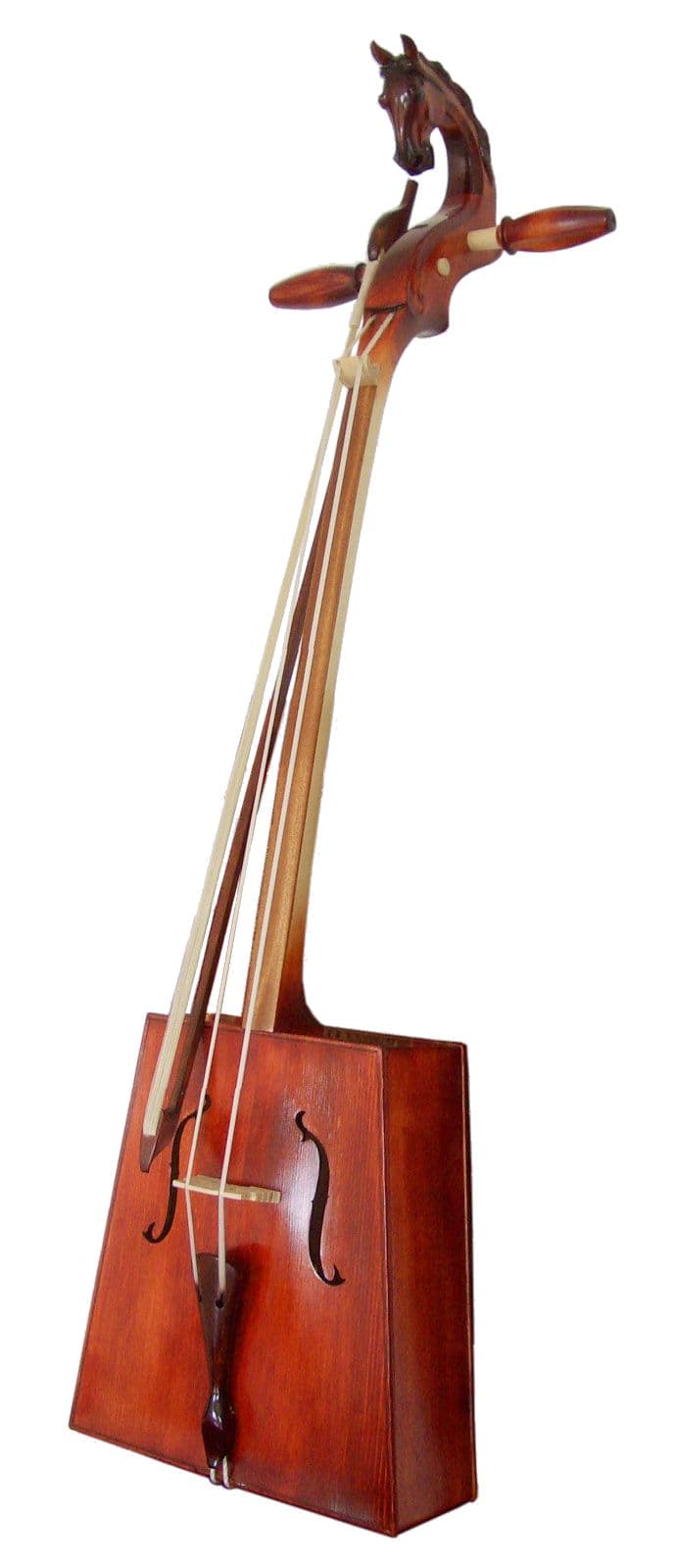
The organization of morin khuur performance directly affects how the repertoire sounds. Traditionally, the instrument was used for solo, folk-song accompaniment, and ensemble with instruments such as the sihu. In folk-song accompaniment, the instrument is not the protagonist but supports the melody, using third and fourth vibrato to echo the singer. In solo, the player sits on the ground, holds the sound box between the knees, bows with the right hand, and with the left hand presses the strings from the left side using the base of the fingernails of the index and middle fingers; this unique fingering gives the timbre a granular quality. Ensemble is a modern development. In 1986, Q. Bileg gathered outstanding morin khuur artists from Inner Mongolia, standardized bowing, rhythm, and fingering, and formed a morin khuur ensemble, pioneering ensemble playing. In 1989 the Chinese Morin Khuur Society was founded, further promoting standardization. When listening to ensemble pieces, notice how the parts divide the work and the sense of uniformity brought by unified bowing. Understanding these organizational forms explains why the same melody sounds very different in solo and ensemble.
5. Suggested Listening Path for Beginners
For listeners new to the morin khuur, a step-by-step path is recommended. First, listen to solo miniatures, preferably short folk-song arrangements, to feel the roundness and low register unique to horsehair strings. Second, listen to descriptive works such as 'Ten Thousand Horses Galloping', noticing passages that imitate horse neighs and hoofbeats, and appreciate the instrument's representational ability. Third, listen to long-song accompaniment, focusing on the breath coordination between instrument and singer. Fourth, listen to ensemble pieces, distinguishing part layering and the uniformity brought by unified bowing. Do not rush; one or two pieces listened to repeatedly are enough for each step. While listening, consider three questions: Is the timbre bright or somber? Where do ornaments appear? Is the instrument monologue or dialogue? Listening with questions makes it easier to get started than listening aimlessly. Note that the morin khuur has relatively weak volume; choose a quiet environment for live listening, and do not set the volume too high when listening to recordings, lest you lose its delicate dynamics.
Questions
What is the most famous signature piece for the morin khuur?
'Ten Thousand Horses Galloping' by Q. Bileg is the most widely known and is often regarded as the signature morin khuur piece, depicting galloping horses with rapid bowing and imitating neighs and hoofbeats.
Which pieces should beginners start with when listening to the morin khuur?
Start with solo miniatures arranged from folk songs to feel the round timbre of horsehair strings, then gradually move to descriptive works like 'Ten Thousand Horses Galloping', long-song accompaniment, and ensemble pieces.
How does morin khuur ensemble sound different from solo?
Solo is freer and more improvisatory, highlighting the flavor and ornaments of a single line; ensemble emphasizes unified bowing, rhythmic precision, and part layering, sounding more orderly and thick-textured.
Source: 马头琴