Ruan Masters and Lineage: From Feng Shaoxian to Today's Scene
Trace the ruan's lineage from folk accompaniment to solo instrument, highlighting Feng Shaoxian, Liu Xing, Xu Yang and today's listening paths.
Where the Ruan Lineage Begins: From Folk Bands to Conservatory
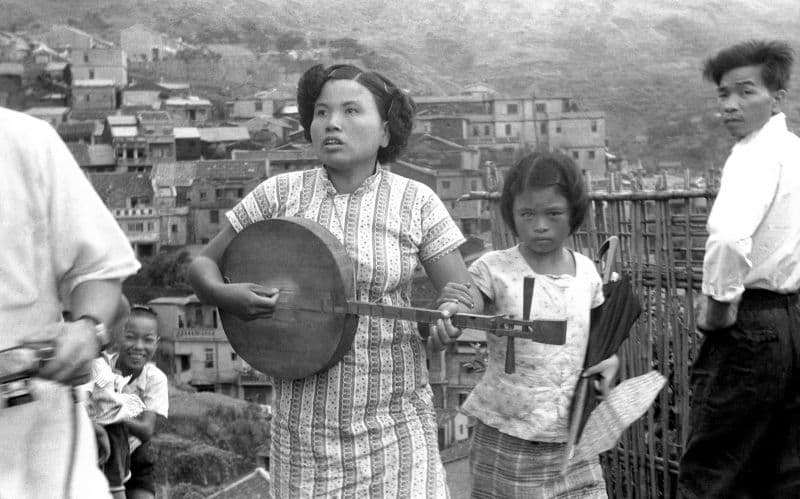
The ruan's lineage was not historically an independent solo tradition. For centuries it existed mainly in ensemble and accompaniment roles—folk bands, opera stages and narrative singing—providing rhythmic and harmonic support. After the mid-20th century, as Chinese orchestras became institutionalized, the ruan family (soprano, small, medium, large and contrabass) took shape, conservatories established ruan majors, and transmission shifted from oral folk-band apprenticeship to conservatory lineages. The key to this shift was that several generations of performers doubled as players and reformers: they took part in instrument improvement, wrote teaching materials and composed solo works, pushing an accompanying instrument onto the solo stage. To understand the ruan's performer lineage, one must first understand this identity migration from ensemble member to solo subject—it is why ruan lineage is organized less by regional schools, as with the guqin, and more by a network of conservatories, orchestras and composer-performer circles.
Feng Shaoxian: The Figure Who Put the Ruan on the Solo Stage
In the modern lineage of the ruan, Feng Shaoxian is often regarded as a pivotal transitional figure. Working for years in orchestras and teaching, he was active both as a performer of the medium and large ruan and in instrument improvement and repertoire building. His contribution lies less in founding a strict school than in proving, as a performer, that the ruan can express complete musical images on its own, and in providing later professional teaching with usable works and training approaches. The solo pieces he helped promote often carry vivid narrative and regional color, emphasizing a balance between the ruan's plucked articulation and its singing quality. Seen today, Feng's significance is that of a node: he translated playing experience accumulated in folk bands into a repertoire and technical language that conservatories could teach, turning ruan transmission from scattered individual experience into a professional chain with works, textbooks and teaching posts.
Liu Xing and Xu Yang: Composer-Performers and Conservatory Lineage
If Feng Shaoxian's generation completed the ruan's 'identity confirmation,' Liu Xing and Xu Yang represent two important paths that followed. Liu Xing emerged as a composer-performer whose works emphasize modern sonorities and a personal idiom, pulling the ruan from traditional narrative toward more abstract instrumental expression; his playing and composing reinforce each other and have influenced younger players seeking individuality. Xu Yang has long devoted himself to conservatory teaching, focusing on fundamentals, tonal standards and textbook building, and has trained many medium and large ruan players active in orchestras and schools, giving ruan pedagogy a sustainable ladder. The two paths are not contradictory: one expands the ruan's artistic boundaries outward, the other consolidates its teaching foundation inward. Today's ruan students in conservatories often benefit from both—studying composer-performer works while receiving systematic conservatory training. This coexistence of 'composition-driven' and 'teaching-driven' transmission is a distinctive feature of the ruan lineage compared with many traditional instruments.
Today's Ruan Network: Orchestra Chairs, Conservatory Lineage, Cross-Regional Ties
Contemporary ruan transmission no longer depends on a single famous teacher but forms a network anchored in orchestra chairs and conservatory posts. In Chinese orchestras, the ruan section—usually medium and large ruan—provides the harmonic and rhythmic backbone; the intonation, blend and section-playing experience musicians gain there in turn shapes solo playing and teaching. In conservatories, ruan faculty at institutions such as the Central Conservatory, China Conservatory and Shanghai Conservatory often combine orchestra and teaching careers, and their lineages overlap, so a student may study with teachers of different institutional backgrounds. Cross-regional exchange is also frequent: ruan players in Hong Kong, Macao, Taiwan and overseas Chinese music ensembles interact with mainland institutions through works and pedagogy. This networked lineage means that asking 'whom did a given ruan player study with' often yields a multi-node path rather than a single school. For listeners, this helps avoid framing the ruan in terms of 'orthodox schools' and instead attend to the concrete musical choices performers make in ensemble and solo settings.
How to Listen Today: Entering Ruan Music Through Lineage Clues
For beginners, entering ruan listening through performers and lineage offers a practical path. First, listen to different performances of the same medium ruan solo work, noticing differences in articulation, vibrato breadth and phrase breathing—differences often tied to lineage background and artistic orientation. Second, attend to the ruan section in orchestral recordings, especially the blend of medium and large ruan in slow passages; this clarifies the instrument's ensemble function and explains why soloists emphasize certain registers. Third, follow composer-performers' works and hear how they combine modern harmony with the ruan's traditional timbre—rather than judging 'traditional or not,' sense the musical logic. Finally, trace a player's lineage network through conservatory or orchestra clues, comparing solo, concerto and ensemble recordings. One caveat: public recordings of the ruan are numerous, and beginners need not seek a single authoritative version; treat different performers' approaches as entry points into the ruan's expressive space.
Questions
Who are notable ruan performers?
Commonly cited figures include Feng Shaoxian, Liu Xing and Xu Yang, who advanced the ruan's solo status, composition and conservatory teaching at different stages. Many medium and large ruan players are also active in orchestras and schools today.
Is ruan lineage divided into schools?
Not in the way guqin is divided into regional schools. Ruan lineage forms a network anchored in conservatories, orchestras and composer-performer circles, with overlapping teacher-student ties.
How can beginners listen to the ruan through performers?
Compare different recordings of the same medium ruan solo, then notice the ruan section's blend in orchestral works, and trace a player's lineage and recordings—no need to seek a single authoritative version.
Source: 阮