Sanxian Signature Pieces and Listening Guide: From Opera and Narrative Music to Solo Classics
A beginner's guide to sanxian signature pieces, covering opera accompaniment, traditional ensembles, and solo works, with listening tips and version suggestions.
Sources and Categories of Sanxian Repertoire
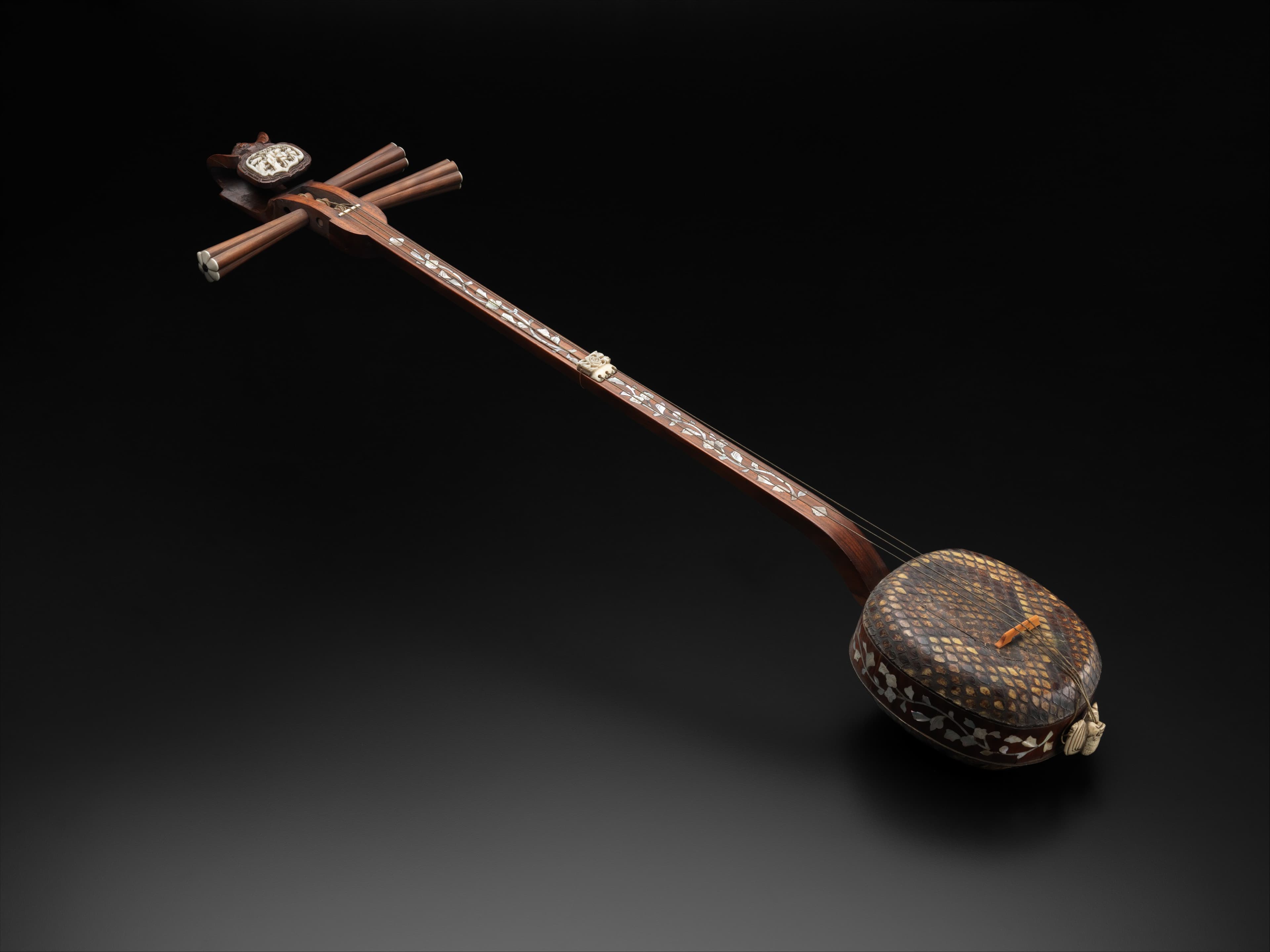
The repertoire of the sanxian is not centered on solo works but is deeply rooted in opera, narrative singing (quyi), and folk ensembles. By source, it can be divided into four categories: first, opera accompaniment, such as the sanxian part in Kunqu and the 'three major instruments' of Peking opera; second, accompaniment for narrative singing, such as Danxian, Dagu, and Sanxian Shu; third, traditional instrumental ensembles, such as the sanxian part in the 'eight major instruments' of Jiangnan Sizhu, the 'five-piece' of Guangdong music, and the upper four instruments of Nanguan; fourth, transplanted and adapted pieces, including ensemble works adapted from opera accompaniment music and guqin pieces, as well as solo works created by contemporary performers to showcase the sanxian's character. Understanding this classification is the starting point for listening to the sanxian—it reminds us that the instrument's musical value often emerges in 'accompanying' and 'blending' rather than isolated showmanship.
Sanxian in Opera and Narrative Singing: Listening to the Wisdom of Accompaniment
In opera and narrative singing, the sanxian's role is to 'support the melody and maintain the mode' and to 'thread and connect.' Take the 'three major instruments' of Peking opera as an example: the sanxian works with the jinghu and yueqin, its dry and granular timbre filling gaps in the vocal line and reinforcing rhythm. When listening, first focus on how the sanxian 'converses' with the vocal: it often inserts short figures at phrase endings or pauses, or interweaves with the yueqin in a pointillistic manner. In northern narrative forms such as Danxian and Dagu, the sanxian is more independent, alternating preludes, interludes, and vocal sections, with the player adjusting flexibly to the singer's breath. It is advisable to choose a familiar aria, first experiencing it as a whole, then tracing the sanxian part alone, noting how its timbre echoes the tonal contours of the language. This wisdom of accompaniment is one of the core aspects of the sanxian's expressive power.
Sanxian in Ensembles: Jiangnan Sizhu, Guangdong Music, and Nanguan
In traditional ensembles, the listening focus for the sanxian lies in 'embedding' and 'yielding.' In the 'eight major instruments' of Jiangnan Sizhu, the sanxian forms a delicate heterophonic texture with the pipa and yangqin; each instrument improvises ornaments around a shared melodic skeleton, and the sanxian's deep timbre provides a foundation. In the 'five-piece' of Guangdong music, the sanxian often works with the gaohu and yangqin, adding a crisp texture to the lively melodies. In the upper four instruments of Nanguan, the sanxian is more restrained, complementing the pipa's 'nianzhi' (plucked notes) in a relationship of 'pipa dots, sanxian lines.' When listening to such ensembles, try the 'focus method': first listen to the overall melody, then trace each instrument's part in turn, and finally return to the ensemble to appreciate how the sanxian establishes its place through 'yielding.' This balance of 'embedding' and 'yielding' is the essence of sanxian ensemble aesthetics.
Solo and Adapted Repertoire: The Sanxian's 'Leading Role' Moments
Solo repertoire for the sanxian is relatively limited, but there are classics worth attention. One category consists of ensemble or solo pieces adapted from guqin works, such as the sanxian version of 'Three Variations on the Plum Blossom,' which uses the instrument's granular timbre to depict the crispness of plum blossoms; another category comprises instrumental pieces distilled from opera accompaniment music, such as certain sanxian solos developed from Kunqu or Peking opera qupai, retaining operatic flavor. In addition, contemporary performers have created works that showcase the sanxian's character, such as modern pieces employing rapid finger sequences, glissandi, and plucking techniques. When listening to solos, focus on the sanxian's 'lines' and 'points': how glissandi after long notes create flavor, and how the granularity in fast passages generates rhythmic tension. Since the sanxian lacks a tradition of solo works specifically designed to showcase its character, listen with a spirit of 'discovery,' appreciating how performers expand the instrument's expressive boundaries within a limited repertoire.
Listening Guide: Version Selection and Listening Path
For beginners, it is advisable to proceed gradually in the order of 'ensemble—accompaniment—solo.' First, choose classic ensemble recordings of Jiangnan Sizhu or Guangdong music to sense the sanxian's timbral positioning within a group; then select an accompaniment from Peking opera's 'three major instruments' or northern narrative singing, noting the interaction between sanxian and vocal; finally, listen to solos or adapted pieces to appreciate the sanxian's expressiveness as a leading instrument. For version selection, prioritize albums recorded by renowned ensembles or performers, such as traditional music compilations published by China Record Corporation, or 'Jiangnan Sizhu' and 'Guangdong Music' specials on major music platforms. When listening, use headphones to carefully distinguish the sanxian part, or refer to scores or videos to observe playing techniques. It is important to keep an open mind: the sanxian's dry timbre is full of character and may seem unfamiliar at first, but with repeated listening, its unique charm and vitality will emerge.
Questions
What are the famous solo pieces for sanxian?
Traditional solo pieces specifically composed for the sanxian are relatively few. Common ones include adaptations of the guqin piece 'Three Variations on the Plum Blossom' and instrumental pieces developed from Kunqu and Peking opera qupai. Contemporary performers have also created modern solo works employing rapid finger sequences and glissando techniques.
How to identify the sanxian's sound in Peking opera accompaniment?
In Peking opera's 'three major instruments,' the sanxian has a dry, granular timbre and often inserts short figures at phrase endings or pauses in the vocal line, contrasting with the sustained jinghu and the crisp yueqin. First listen to an aria as a whole, then focus on tracing the sanxian's plucked points, noting how it fills melodic gaps.
Which sanxian recordings should beginners start with?
It is recommended to start with classic ensemble recordings of Jiangnan Sizhu or Guangdong music to sense the sanxian's timbre within a group; then listen to accompaniments from Peking opera's 'three major instruments' or northern narrative singing, noting the interaction with the vocal; finally try solos or adapted pieces. You can choose traditional music compilations published by China Record Corporation or themed playlists on music platforms.
Source: 三弦