
Suona Construction and Acoustics: From Reed to Bell
Explore the suona's construction and acoustics, from reed vibration to body resonance and bell amplification, and learn how to listen to its unique sound.
1. Origins and General Construction
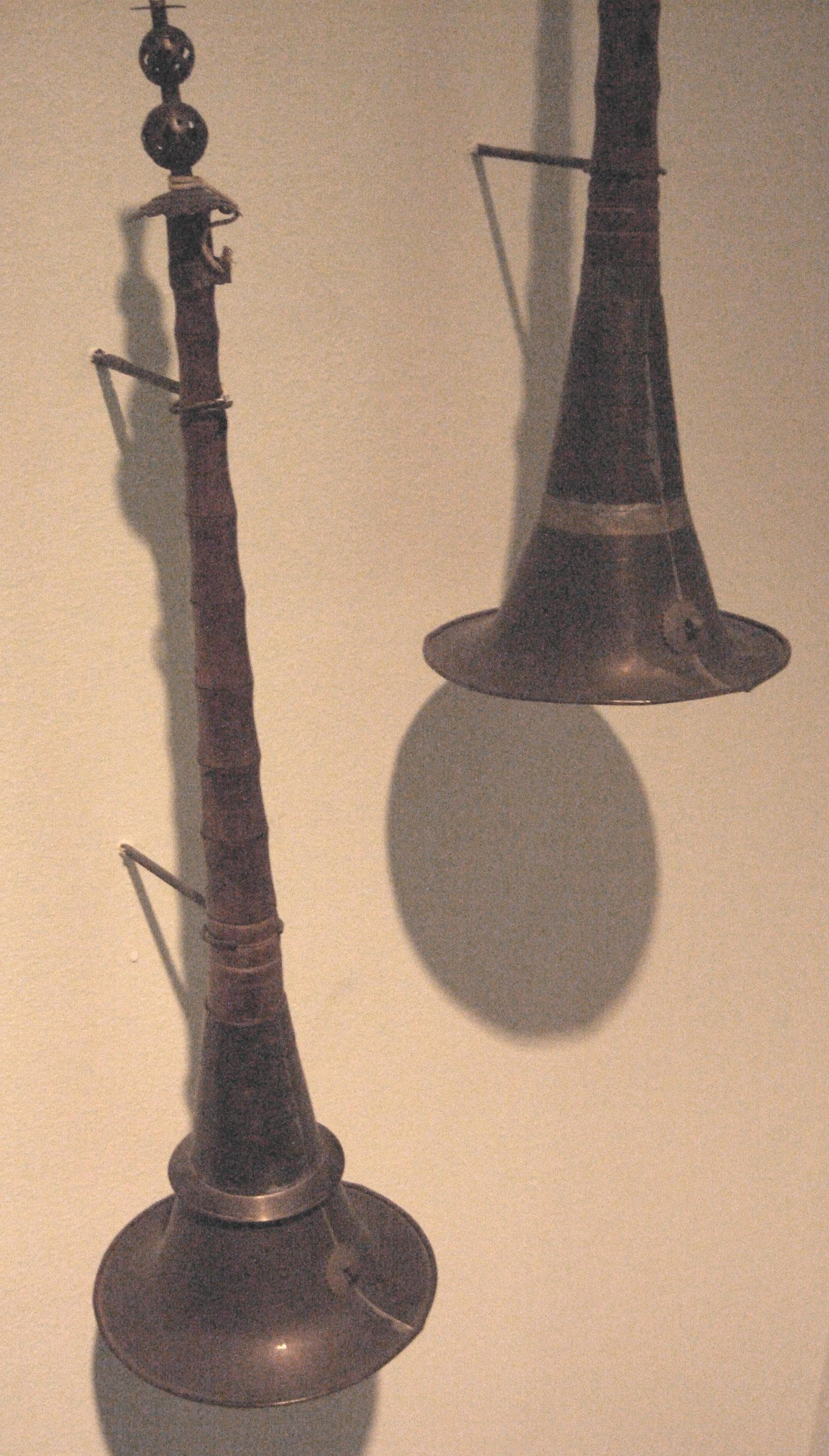
The suona is not native to the Central Plains; its ancestor, the Persian surnāy, arrived in China around the Yuan dynasty via the Western Regions and gradually became part of folk weddings, funerals, festivals, and military music. A traditional suona consists of four parts: reed, staple, body, and brass bell. The wooden body is conical and segmented, with a reed inserted at the top and a brass bell at the bottom. This combination of wooden pipe and brass bell is distinctive among double-reed instruments worldwide.
2. The Reed: Where Sound Begins
The reed is the sound-producing core of the suona, usually made of reed cane and scraped thin and elastic. When played, the lips hold the reed and airflow sets it vibrating, generating the initial sound wave. The reed's thickness, stiffness, and shape directly affect timbre, pitch, and response. Players often keep several reeds, swapping them to adjust brightness or adapt to different climates. The reed's vibration frequency determines the fundamental pitch, while lip pressure on the reed fine-tunes pitch and enables techniques like glissando and vibrato.
3. The Body and Finger Holes: Resonance and Temperament
The body is the resonating chamber of the suona. A traditional body has eight finger holes, operated by the right index, middle, ring, and little fingers and the left thumb, index, middle, and ring fingers. The conical bore selectively amplifies sound waves, producing the suona's characteristic bright timbre. Hole placement and size determine the scale; traditional suonas often follow local tunings, while modern改良 suonas use twelve-tone equal temperament for easier transposition and ensemble playing. The density and dryness of the wood also affect resonance, with older wood often yielding a warmer tone.
4. The Brass Bell: Amplification and Timbre Shaping
The brass bell at the bottom of the body is flared and mainly serves to amplify sound while also shaping timbre. The bell's opening size, curvature, and material affect sound projection and high-frequency content. Traditional brass bells are thin and vibrate freely, producing strong penetration suitable for outdoor playing. The rolled rim reduces air turbulence and focuses the sound. Players occasionally adjust the bell angle or use mutes to alter volume and tone, though this is rare in traditional performance.
5. From Traditional to Modified: Construction Changes and Acoustic Differences
Since the twentieth century, the suona has undergone modifications to meet the needs of Chinese orchestras. Keyed suonas adopt oboe-like keywork, adding chromatic keys and extending range so that alto and bass suonas can fill the wind section. Finger holes are rounded and arranged in equal temperament for easier transposition. These changes alter the instrument's acoustics: keyed suonas have a more uniform tone, but some traditional players feel they lose the original wildness and flexibility. Traditional suonas, with fixed holes, require breath and fingering to produce semitones, making intonation more challenging but preserving strong regional character.
6. Listening Guide: Appreciating the Suona's Acoustics
When listening to the suona, focus on its penetrating timbre and dynamic range. In outdoor wind-and-percussion ensembles, the suona often competes with gongs and drums; notice how reed control creates contrasts in intensity. In chamber or solo settings, observe how the player uses the reed and breath to shape glissandi, vibrato, and tonal color. In orchestras, the modified suona often handles harmony and rhythm; compare its timbre with the oboe. Begin with local wind-and-percussion ensemble music to sense the suona's sonic place in a group, then move to solo works to appreciate its expressive detail.
Questions
What material is the suona reed made of?
Traditional reeds are usually made of reed cane, scraped thin and elastic; modern alternatives include other bamboos or synthetic materials.
Why is the suona so loud?
The reed generates high-frequency vibrations, the conical wooden body selectively amplifies them, and the brass bell further projects and enhances high frequencies, together producing the suona's loud sound.
What are the main construction differences between keyed and traditional suonas?
Keyed suonas add an oboe-like key system, with round holes arranged in equal temperament, extending range and chromatic capability; traditional suonas keep eight holes and rely on breath and fingering for intonation.
Source: 唢呐