Erhu Masters and Lineage: From Liu Tianhua to Contemporary Schools
Explore erhu masters and lineage: from Liu Tianhua's reforms to Jiang Fengzhi, Wang Guotong, Min Huifen, and contemporary schools, with listening tips.
Where the Lineage Begins: Liu Tianhua and the 20th-Century Turn
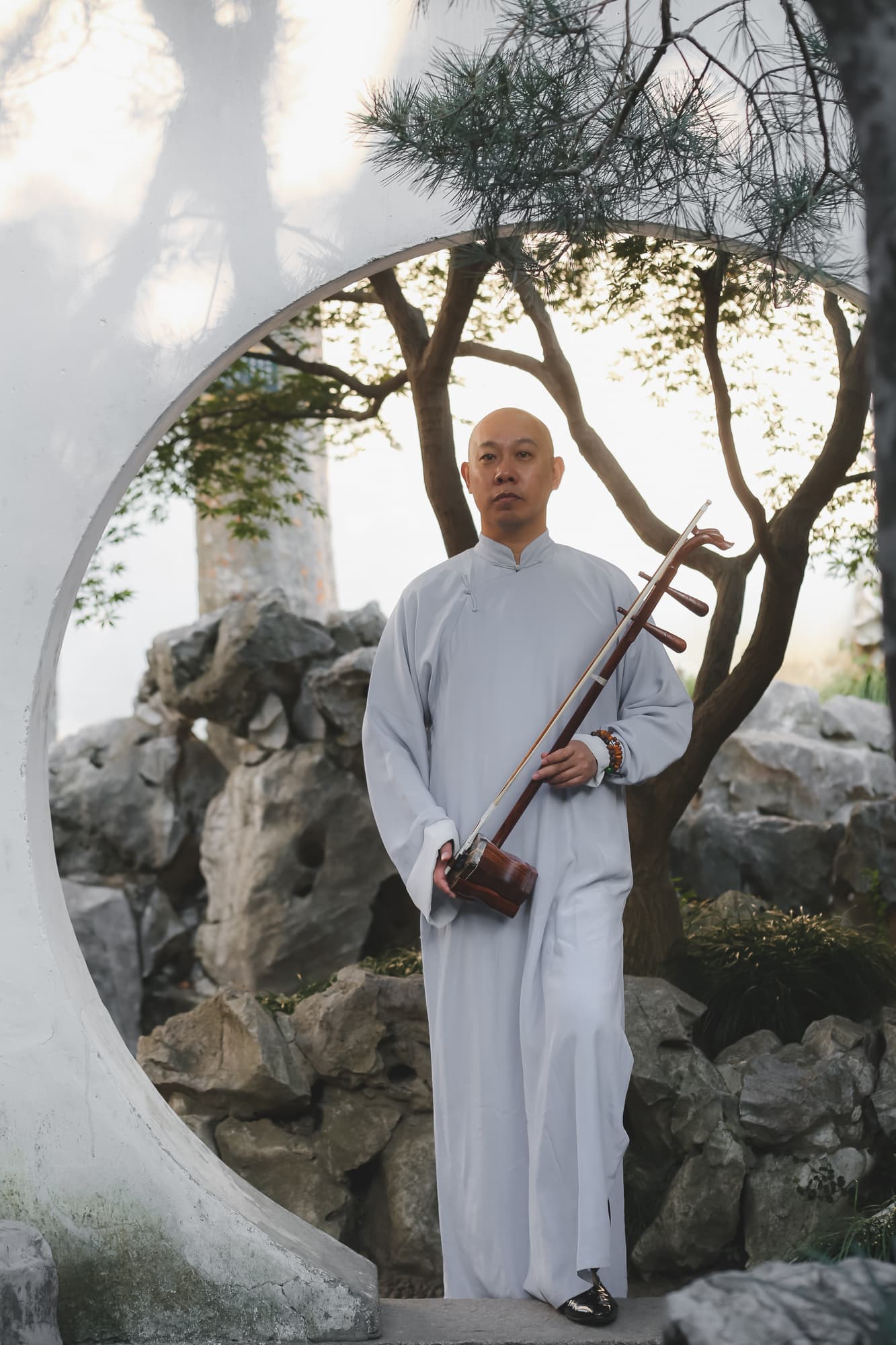
The erhu did not always have a clear lineage of transmission. For a long time it was an instrument of folk artists, opera accompanists, and street performers, with skills passed on orally and few names recorded. It was Liu Tianhua during the May Fourth Movement period who brought the erhu into the视野 of modern professional music education. He drew on European music theory and performance techniques, adapted them to the characteristics of Chinese folk music, and, referencing the violin, set the erhu's tuning to d and a. He reformed playing techniques, expanded the instrument's expressive power, and composed many solo pieces. The significance of this shift: the erhu went from an accompanying instrument to a solo instrument, and from a folk craft to a teachable, inheritable profession. After this, erhu transmission began to have clear teacher-student relationships, textbooks, and competition systems.
How Lineage Is Organized: Conservatories, Ensembles, and Competitions
After the mid-20th century, erhu transmission gradually formed three parallel paths. The first was conservatories. From the 1950s to the 1960s, professional national orchestras modeled on symphony orchestras emerged, such as the Shanghai Chinese Orchestra, the China Broadcasting Chinese Orchestra, and the China National Traditional Orchestra. This increased demand for erhu professionals and promoted the establishment of erhu departments in conservatories. The second was ensemble-based lineage. Many performers were both soloists and principals or section leaders in orchestras, and their styles spread through rehearsals and performances. The third was competitions and grading exams. In 1963, the first National Erhu Competition was held at the 4th Shanghai Spring Music Festival. Since then, various competitions have become channels for young performers to emerge, and they allow different lineages to be compared and disseminated on the same stage. These three lines intertwine, giving erhu transmission both academic standardization and ensemble practice, as well as competition-driven exchange.
Notable Performers and Their Contributions: From Jiang Fengzhi to Min Huifen
In the modern transmission of the erhu, several performers' names are closely tied to specific improvements and styles. In the 1930s, Jiang Fengzhi designed the "hexagonal dumbbell" erhu, also known as "Jiang's nanhu"; Zhou Rongting, together with Jiang Fengzhi and Lu Xiutang, designed the "Yangshan handle" erhu and the "huiwen head" erhu. These structural explorations were not only innovations in making but also influenced playing feel and tonal orientation. In the 1970s, Tang Liangde developed the front-octagonal, rear-round (fangyuan) erhu and an adjustable half-moon sound window; Wang Guotong and Man Ruixing specified the dimensions of the "flat-eight" erhu and added a bamboo tube inside the resonator to improve high-register tone. In the 1970s, Wang Guotong and Man Ruixing began developing the Erquan qin, which was successfully developed in the 1980s by Min Huifen with Wang Ruiquan and Shen Deqing. Min Huifen's playing was known for its depth and delicacy, and her artistic practice brought the erhu broader emotional resonance among contemporary listeners. These performers were both players and innovators, and their names form a thread where "people" and "instrument" intertwine in erhu lineage.
Stylistic Differences in Transmission: Regional Making and Performance Orientation
Erhu transmission is reflected not only in teacher-student relationships but also in regional styles. China is the main production area for erhu, with Shanghai, Beijing, and Suzhou being the most concentrated. Traditionally, erhu made in Shanghai have a softer, more delicate tone; those from Beijing have a brighter, more strident tone; and those from Suzhou have a sweeter sound. These acoustic differences are related to craftsmanship: the thickness and tightness of the python skin, and the thickness and shape of the resonator all produce different effects. When choosing an instrument, performers often select according to their stylistic orientation and repertoire needs. For example, for lyrical, introspective pieces, they may prefer a softer-toned instrument; for passionate, narrative works, they may prefer a brighter one. This relationship of "people choosing instruments, instruments shaping people" is an easily overlooked but important part of erhu lineage.
How to Listen Today: An Entry Path Through Lineage Styles
For beginners, listening to erhu lineage styles can start from several practical dimensions. First, listen to "phrasing." Performers from different lineages differ noticeably in the breathing of phrases, the depth of slides, and the density of vibrato. Some are more reserved, others more extroverted. Second, listen to "tone choice." The same piece played on a Shanghai, Beijing, or Suzhou instrument will have a different overall character. Third, listen to "structural handling." Conservatory-trained performers often pay more attention to the overall layout and tempo layers of a piece, while those from ensembles may emphasize interplay with the orchestra. Fourth, listen to "traces of era." Early recordings differ markedly from contemporary playing in tempo and slide habits; this difference itself is evidence of transmission. It is suggested to start with publicly available recordings by representative performers such as Liu Tianhua, Jiang Fengzhi, Wang Guotong, and Min Huifen. Do not seek the "most authoritative version," but compare how different lineages handle the same phrase, gradually building your own listening coordinates.
Questions
Is teacher-student lineage important for the erhu?
Yes. Lineage influences playing style, technical habits, and repertoire choices, and is a key clue to understanding differences in erhu performance.
What was Liu Tianhua's greatest contribution to erhu lineage?
He set the erhu's tuning to d and a, reformed playing techniques, and composed solo pieces, transforming it from a folk accompanying instrument into a teachable, inheritable professional solo instrument.
How can beginners hear stylistic differences among erhu performers?
Compare the depth of slides, vibrato density, tone choice, and tempo handling in the same phrase. Don't seek an authoritative version; build your own comparative coordinates.
Source: 二胡