
The Construction and Acoustics of the Sheng: Secrets of the Free Reed
Explore the construction and acoustics of the sheng, China's ancient free-reed instrument. Learn how its pipes, reeds, and wind chest produce sound on both blow and draw,
Origins and General Form of the Sheng
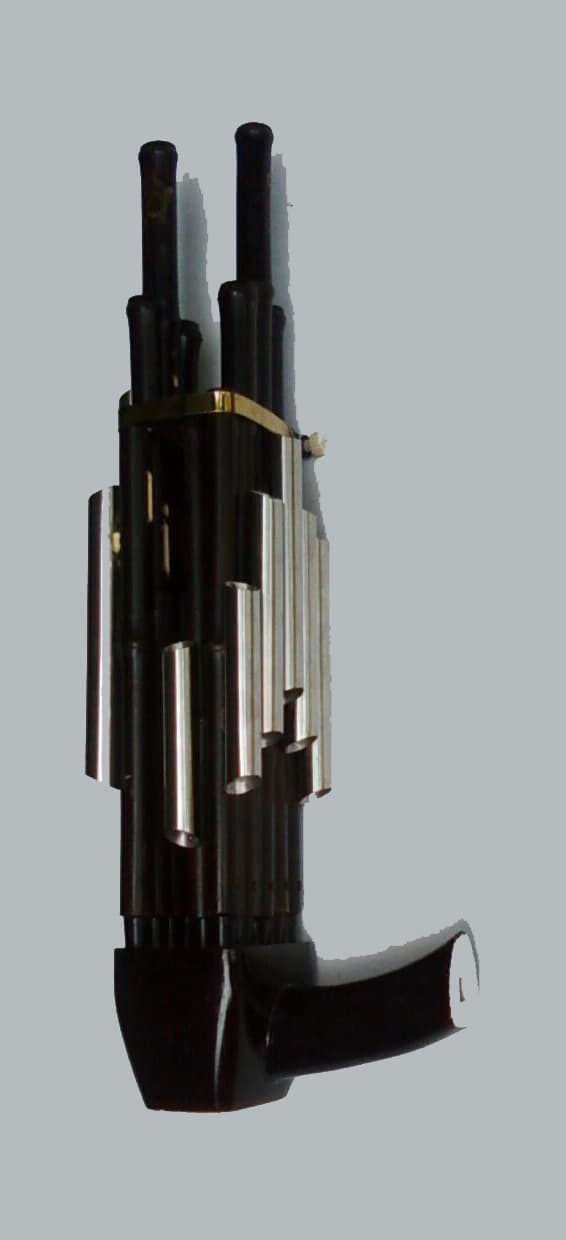
The sheng is one of China's oldest instruments, belonging to the gourd (pao) category of the eight traditional materials, and produces sound through the resonance of reeds and pipes. Its history dates back to the Shang and Zhou dynasties, and the character for sheng appears in oracle bone inscriptions. Traditionally, the wind chest was made of gourd, hence its classification. A traditional sheng consists of a wind chest, bamboo pipes, reeds, and a blowpipe. The wind chest is the base, originally gourd but later wood or metal; the pipes are vertical bamboo tubes inserted into the chest, each with finger holes and a metal reed inside; the blowpipe connects to the chest for blowing and drawing. Sheng come in various sizes, commonly with 17, 21, or 24 reeds, and modern improved versions include the 36-reed keyed sheng. The sheng is not only a solo instrument but also plays a key role in Kunqu opera, northern wind and percussion ensembles, and modern Chinese orchestras.
Wind Chest and Pipes: Construction Details
The wind chest is the base of the sheng, traditionally made of gourd but now often wood or metal. It is a hollow chamber connected to the blowpipe. The pipes are vertical bamboo tubes inserted into the chest, each closed at the top and open at the bottom to the chest cavity. Finger holes on the pipes are opened and closed to change the length of the air column, thus altering pitch. The reeds are the core sound-producing elements, made of copper or steel and fixed at the base of each pipe. Each reed has a tongue that vibrates when air flows through. The pipes are arranged in a circle or square, ordered by scale for easy playing of harmonies. The connection between pipes and chest must be airtight to ensure efficient airflow.
Acoustic Principle: Coupling of Free Reed and Pipe
The sound production of the sheng relies on the coupling of free reeds and pipes. When air flows through the reed, the tongue vibrates, creating a complex sound wave with multiple frequencies. The reed's own vibration frequency determines the fundamental pitch, while the air column in the pipe resonates at specific frequencies, reinforcing certain harmonics and enriching the tone. Because the reed vibrates freely, both blowing and drawing can excite vibration, allowing the sheng to sound on both inhale and exhale—a unique feature. During playing, fingers open and close holes to change the pipe length, thus altering the resonance frequency and pitch. The sheng can also play multiple notes simultaneously to form harmonies, as each pipe vibrates independently and airflow can drive several reeds at once. This polyphonic ability enriches the ensemble sound.
Evolution from Traditional to Modern Sheng
Traditional sheng typically have bamboo pipes and wooden wind chests, with small reeds and limited range, commonly with 17 or 21 reeds. Since the 20th century, to meet the needs of modern Chinese orchestras, the sheng has undergone several improvements. Modern sheng use metal wind chests and key mechanisms, expanding the range and adding chromatic notes for easier modulation. For example, the 36-reed keyed sheng can play twelve-tone equal temperament with a range of over three octaves. Variants such as the amplified sheng and paish eng (row sheng) exist for different settings. While retaining the traditional timbre, improved sheng offer better playability, making them important harmony and melody instruments in Chinese orchestras.
Listening Guide: How to Appreciate the Sheng
When listening to the sheng, notice its unique timbre: soft and round, with a slight reed vibration, both bright and subtle. In ensembles, the sheng often provides harmonic support or melodic embellishment, its polyphony filling out the sound. In solo works, observe how the player uses alternating blow and draw for legato phrasing and employs harmonies. Traditional pieces like 'Phoenix Spreading Wings' showcase the sheng's virtuosic techniques, while modern works explore more sonic possibilities. In Kunqu accompaniment, the sheng blends with dizi and pipa to create an elegant atmosphere. It is recommended to start with folk wind ensembles and Kunqu accompaniment to appreciate the sheng's role in ensemble, then move to solo works to experience its expressive nuances.
Questions
Why can the sheng produce sound on both blowing and drawing?
Because the sheng uses free reeds that can vibrate in both directions, airflow whether blown or drawn excites the reed tongue to vibrate and produce sound.
What material are sheng reeds made of?
Traditional sheng reeds are often made of copper or steel, and modern versions may use alloys. The reed tongue is finely cut to ensure sensitive vibration.
What is the difference between sheng and lusheng?
The sheng is a traditional Han Chinese free-reed instrument with a gourd or wooden wind chest; the lusheng is a southwestern minority instrument with a gourd chest and longer pipes, often used for dance accompaniment.
Source: 笙