
Guqin Signature Pieces: A Beginner's Listening Guide from Flowing Water to Guangling San
A beginner's guide to guqin signature pieces: origins, structure and listening tips for Flowing Water, Guangling San, Wild Geese over the Sands and more.
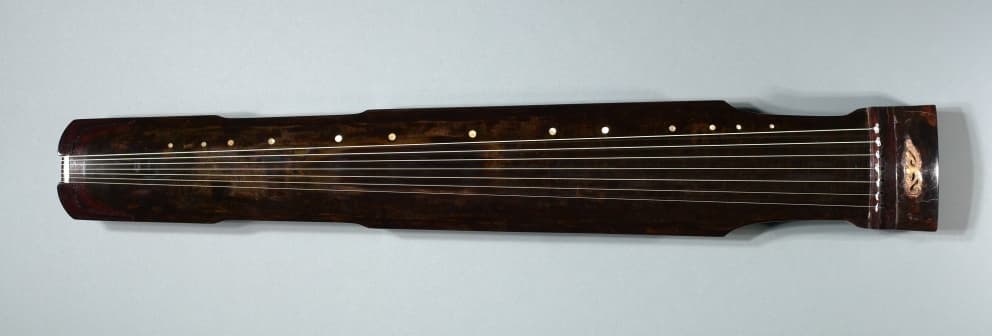
Where the Repertoire Comes From: A Three-Millennium Memory Bank
With over 3,000 surviving pieces and more than 130 notation collections, the guqin repertoire is one of the most complete instrumental archives in Chinese culture. These pieces did not appear from nowhere: they accumulated through the Shang and Zhou dynasties, matured in the Spring and Autumn and Warring States periods, expanded in the Qin and Han, reached a peak in the Tang, continued through the Song and Ming, and deepened into the mid-Qing. Sources fall into several groups: ancient pieces transmitted since pre-Qin times, such as Guangling San, which is thought to preserve relatively early musical forms; works composed or arranged by later players, such as Xiaoxiang Shuiyun by Guo Mian of the Southern Song; literati miniatures that use scenery or objects as vehicles for personal expression, such as Ping Sha Luo Yan and Meihua San Nong; and qin songs, pieces with sung texts, of which about 300 survive. These pieces reached us through three channels: hand-copied jianzipu notation, printed qin manuals, and oral transmission. In the mid-1950s fewer than one hundred people in China could play the instrument; by around 2008, about twenty thousand players existed in China and overseas, and the repertoire's reach expanded from the Chinese cultural sphere to a wider international network of qin societies. In 2003 guqin art was inscribed on UNESCO's second batch of Masterpieces of the Oral and Intangible Heritage of Humanity, and in 2006 it entered China's first national intangible cultural heritage list, giving the old repertoire a new context for transmission.
How Pieces Are Organized: Titles, Sections and the Hints of Jianzipu
Guqin pieces have several distinctive structural features. First, most carry literary titles such as Gaoshan, Liushui, Ping Sha Luo Yan and Xiaoxiang Shuiyun; these titles suggest moods or allusions rather than specific plots. Second, many longer pieces are divided into sections, often with subheadings: the section titles of Guangling San carry narrative color, while those of Xiaoxiang Shuiyun depict different layers of misty waves. These section titles serve as useful landmarks for listeners. Third, guqin uses jianzipu notation, which does not directly record pitch and duration but instead records left- and right-hand finger techniques, string numbers and hui positions. As a result, the same piece differs in detail across schools and players, creating a tradition of "one piece, many renditions." Fourth, the unfolding of a piece often relies on the alternation of three timbres: open strings, stopped strings and harmonics. Open strings sound broad like bells or chimes; stopped strings allow delicate slides and vibrato; harmonics ring clear like pearls falling on jade. Tracking the distribution of these three timbres helps listeners perceive the piece's breathing and layers. In addition, tempo changes in guqin music are rarely dramatic; tension is created through the tightening and loosening of pulse and the pauses between notes. This use of silence is one of the core features of guqin musical organization.
Five Signature Pieces: Listening Points for Beginners
Liushui (Flowing Water) is the source of the famous story of the bosom friend: Boya and Ziqi. Listen for the passages that imitate water: a trickle at first, then layer upon layer, with harmonics and stopped notes alternating to suggest a stream growing into a river. Different schools handle this "flowing water" section quite differently, some emphasizing impression, others realism. Guangling San is one of the oldest surviving guqin pieces, and its longer structure includes section titles colored by the story of Nie Zheng assassinating the King of Han. Its musical character is impassioned and vehement, contrasting with the calm detachment of most guqin music; listen for its strong rhythmic contrasts and the dynamic shifts in stopped-string slides. Ping Sha Luo Yan (Wild Geese over the Sands) is one of the most widely transmitted literati pieces, with an expansive melody and open imagery. Focus on the ethereal quality of the harmonic sections and the vibrato flavor of the stopped-string passages, evoking geese circling and settling. Meihua San Nong (Three Variations on Plum Blossom) takes its name from the three appearances of a harmonic theme; "three variations" means the same melody presented three times in different registers or timbres. Track each transformation of this theme and feel how the image of plum blossom defying the cold is expressed through timbral contrast. Xiaoxiang Shuiyun is a work by Guo Mian of the Southern Song, using the scenery of the Xiao and Xiang rivers to express concern for the nation. Its sliding stopped-string notes flow continuously, punctuated by harmonics; listen for its emotional rises and falls and its sense of vast, misty space.
How to Listen Today: From Repertoire to Listening Habits
For beginners, building listening habits matters more than memorizing titles. First, start with short pieces with clear titles, such as Ping Sha Luo Yan and Meihua San Nong, then gradually move to longer works like Liushui and Xiaoxiang Shuiyun. Second, listen with three questions in mind: which timbre dominates this passage? How does one section transition to the next? Is the mood steady or fluctuating? These questions help you move from casual hearing to informed listening. Third, listen to different players' versions of the same piece to sense the tradition of "one piece, many renditions," but do not rush to judge better or worse; accumulate listening experience first. Fourth, you may read section titles and allusions alongside the music, but do not let textual explanation replace auditory experience. Much of the guqin's appeal lies in conveying mood without relying on a specific plot. Fifth, in live listening, note that the instrument is not loud; a quiet environment matters greatly, and close listening reveals the subtle changes of sliding notes and the lingering resonance of harmonics. Finally, the repertoire is vast; there is no need to hear every famous piece. Choosing three to five pieces and listening repeatedly often yields more than broad, shallow listening. As experience grows, you will gradually discover that the guqin's way of organizing music, its timbral shifts and its aesthetics of silence are exactly why it remains moving after three thousand years.
Questions
Which guqin pieces should beginners listen to first?
Start with shorter pieces with clear titles such as Ping Sha Luo Yan and Meihua San Nong, then gradually move to longer works like Liushui and Xiaoxiang Shuiyun.
Why does Guangling San sound different from other guqin pieces?
Guangling San is one of the oldest surviving guqin pieces. Its impassioned character and strong rhythmic contrasts set it apart from the calm, detached style of most guqin music.
Do I need to know the stories behind guqin pieces before listening?
Knowing the allusions and section titles helps as landmarks, but you need not rely on plot. The guqin's appeal lies in conveying mood without a specific story, so let listening lead.
Source: 古琴