
Suona Signature Pieces: A Listening Guide from 'Hundred Birds' to Chuida Ensembles
A beginner's guide to suona signature pieces: origins, performance organization, and listening tips for classics like 'Hundred Birds Paying Homage to the Phoenix' and chu
1. Where the Repertoire Comes From: Folk Contexts and Qupai Traditions
Suona repertoire is rarely composed from scratch; most pieces grew out of folk contexts and qupai (labeled tune) traditions. In Shandong, Henan, Hebei, Shanxi, Shaanxi, Gansu, and Northeast China, the suona has long been used in weddings, funerals, festivals, temple fairs, and ritual wind-and-percussion music. Repertoire divides by occasion: joyful events favor bright, vigorous qupai, while funerals use somber, mournful tunes. Many classics began as qupai—instrumental sections with fixed names and basic melodic skeletons—which performers varied and ornamented improvisationally, gradually forming regionally distinct versions. Opera and narrative singing are also important sources; the suona often accompanies local opera or plays transplanted vocal melodies as independent pieces. When listening, then, first ask: what occasion did this piece originally belong to? Ritual music, opera accompaniment, or a virtuoso solo for competition? The answer often determines the piece's emotional tone and structural logic.
2. Key Pieces: From 'Hundred Birds' to Regional Classics
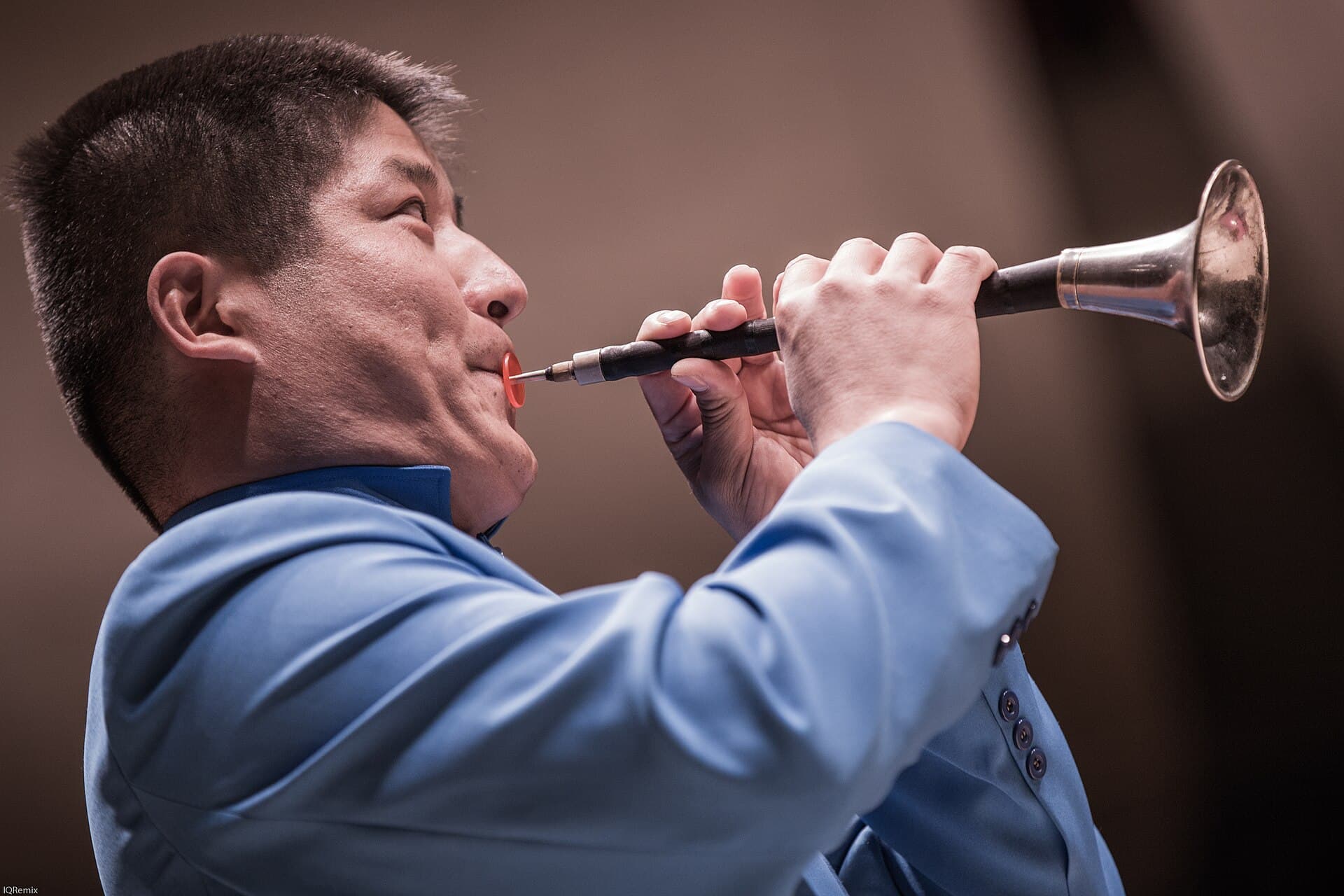
Among suona signature pieces, the most widely known is undoubtedly 'Hundred Birds Paying Homage to the Phoenix' (Bai Niao Chao Feng). Centered on imitating bird calls, the performer uses circular breathing, glissando, vibrato, flutter-tonguing, and other techniques to weave various bird sounds into the melody. It tests breath control as well as the fidelity and musicality of imitation, and is often regarded as a touchstone of suona technique, with great variation among schools and individual players. Another common category is festive chuida pieces such as 'Carrying the Sedan Chair' and 'Wedding Tune,' with brisk rhythms and tight coordination with gongs and drums, emphasizing bustle. In Shandong and Henan, qupai-based pieces like 'Da De Sheng' and 'Yi Zhi Hua' have relatively regular structures, suitable for savoring the suona's melodic charm. Opera transplants, such as excerpts from 'Chaoyang Gou,' are also common in regional suona playing. Beginners need not tackle many; choosing one or two stylistically contrasting pieces—say, a bird-imitation showpiece and a festive chuida—reveals the two extremes of the suona's expressive range.
3. How It Is Organized: Solo, Chuida, and Ensemble Roles
How a suona piece is organized directly shapes the listening experience. The most common is solo, with the suona as lead, accompanied by sheng, dizi, or small percussion, highlighting melody and technique. Next is chuida ensemble, where the suona coordinates tightly with gongs, drums, and cymbals, creating a dialogue between 'blowing' and 'striking'; common in weddings, funerals, and festival processions, it emphasizes momentum and rhythmic precision. In local opera accompaniment, the suona often joins banhu, dizi, and others to form timbral layers for civil or martial scenes, sometimes serving opening, transitional, or emotional-turning functions. In modern Chinese orchestras, the suona's volume and penetration lead composers to use it like a brass section, often in fervent, jubilant, or dramatic passages; improved keyed alto and bass suonas fill the middle and low registers. When listening, notice the relationship between suona and accompaniment: is it leading, competing with percussion, or blending into the orchestral texture? This determines whether to focus on melody, rhythm, or timbre.
4. How to Listen Today: A Beginner's Path and Key Points
For beginners, listening to suona pieces can start with a sense of scene. Begin with a publicly available performance of 'Hundred Birds Paying Homage to the Phoenix,' noticing how the player inserts bird calls between melodic phrases: are they scattered ornaments or formed into sections, is the breath continuous, is the timbre bright or softer? Next, listen to a festive chuida piece such as 'Carrying the Sedan Chair,' feeling the interplay between suona and gongs/drums, the tightening and loosening of rhythm, and how the suona keeps the melody clear amid bustle. Third, seek regional qupai pieces, such as Shandong or Henan chuida tunes, noting how the same qupai is ornamented differently across performances. Don't strive to 'understand' every note; focus on three layers: is the melodic skeleton clear, do techniques serve the music, and does the timbre match the occasion? If you can hear chuida live at a wedding, funeral, or temple fair, you'll better appreciate the suona's volume, penetration, and relationship to space. For recordings, choose public versions with clearly labeled performers and titles, and avoid unattributed compilations.
5. Common Misconceptions and Tips for Going Further
New listeners often equate 'loud' with 'noisy,' or assume the suona only plays joyful tunes. In fact, its timbre varies greatly; through reed control and breath adjustment, it can produce soft, desolate, even delicate lyrical passages—Chaozhou suona's 'da chui' and 'xiao chui' are cases in point. Another misconception is focusing only on technique while ignoring structure: bird imitations are impressive, but a piece's overall arc and tempo layout deserve attention too. For advanced listening, compare different regional versions of the same piece, noting differences in ornamentation, rhythmic flexibility, and timbral preference; also observe the suona's use in opera accompaniment, how it coordinates with vocal lines and plot. If interested in improved suonas, compare traditional and keyed instruments in intonation, range, and timbre—not to judge superiority, but to understand the musical contexts each serves.
Questions
What is the most famous suona signature piece?
'Hundred Birds Paying Homage to the Phoenix' is the most widely known, famous for bird-call imitation and techniques like circular breathing, often regarded as a touchstone of suona skill.
Which suona pieces should beginners start with?
Start with 'Hundred Birds' for technique and bird imitation, then a festive chuida piece like 'Carrying the Sedan Chair' to experience coordination with gongs and drums, creating a contrast.
What role does the suona usually play in a Chinese orchestra?
Due to its volume and penetration, it often takes a brass-like role, appearing in fervent or dramatic passages; keyed alto and bass suonas fill the middle and low registers.
Source: 唢呐